I
Context
The brief
This project was developed for a game design class to demonstrate understanding of game mechanics, visual communication, interaction flow, and user engagement. The assignment required designing a small but complete game using Processing that included a clear concept, visual identity, interactive mechanics, and a progression system.
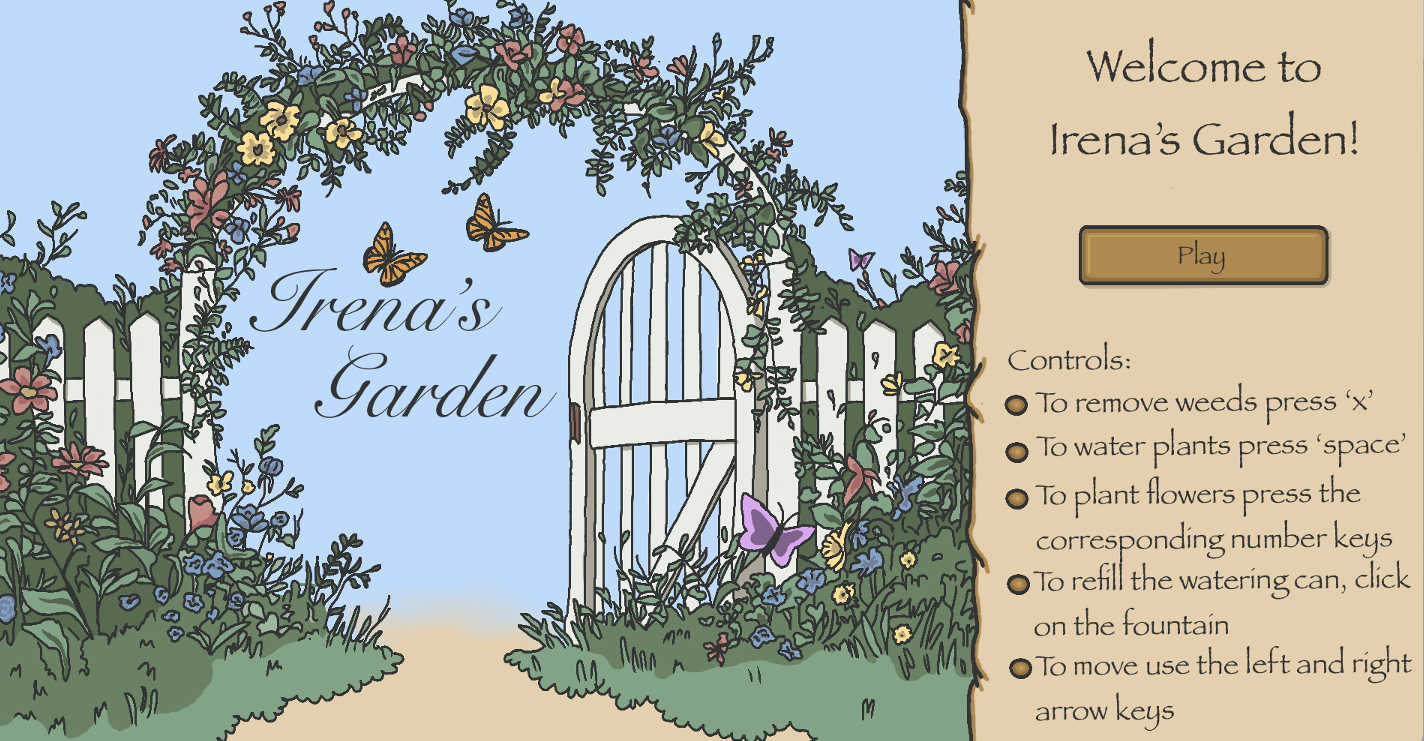
Title Screen
The problem space
I wanted to create an experience that felt calm and emotionally engaging, rather than fast-paced or competitive, leading to the concept of Irena's Garden, loosely based on my own childhood memories in my grandmother's garden.
The game follows a young girl restoring an abandoned garden once cared for by her late grandmother. As players complete planting puzzles, they slowly uncover fragments of childhood memories tied to the space. The project explored how storytelling could be woven into gameplay mechanics, using progression and interaction not just as challenges, but as a way of revealing emotion, memory, and connection.
II
Strategy
Approach
With these initial ideas in place I was able to create a UML diagram to layout the project and act as a first iteration of the game. In Processing, I worked to implement the movement, planting, watering, and resource mechanics. I also created adjacency and placement rules for puzzles and built a progression system where each area unlocks after completing a planting challenge. I encountered a few difficulties along the way where I needed to revise my code structure or create additional code elements which differed from the structure of my initial diagram.
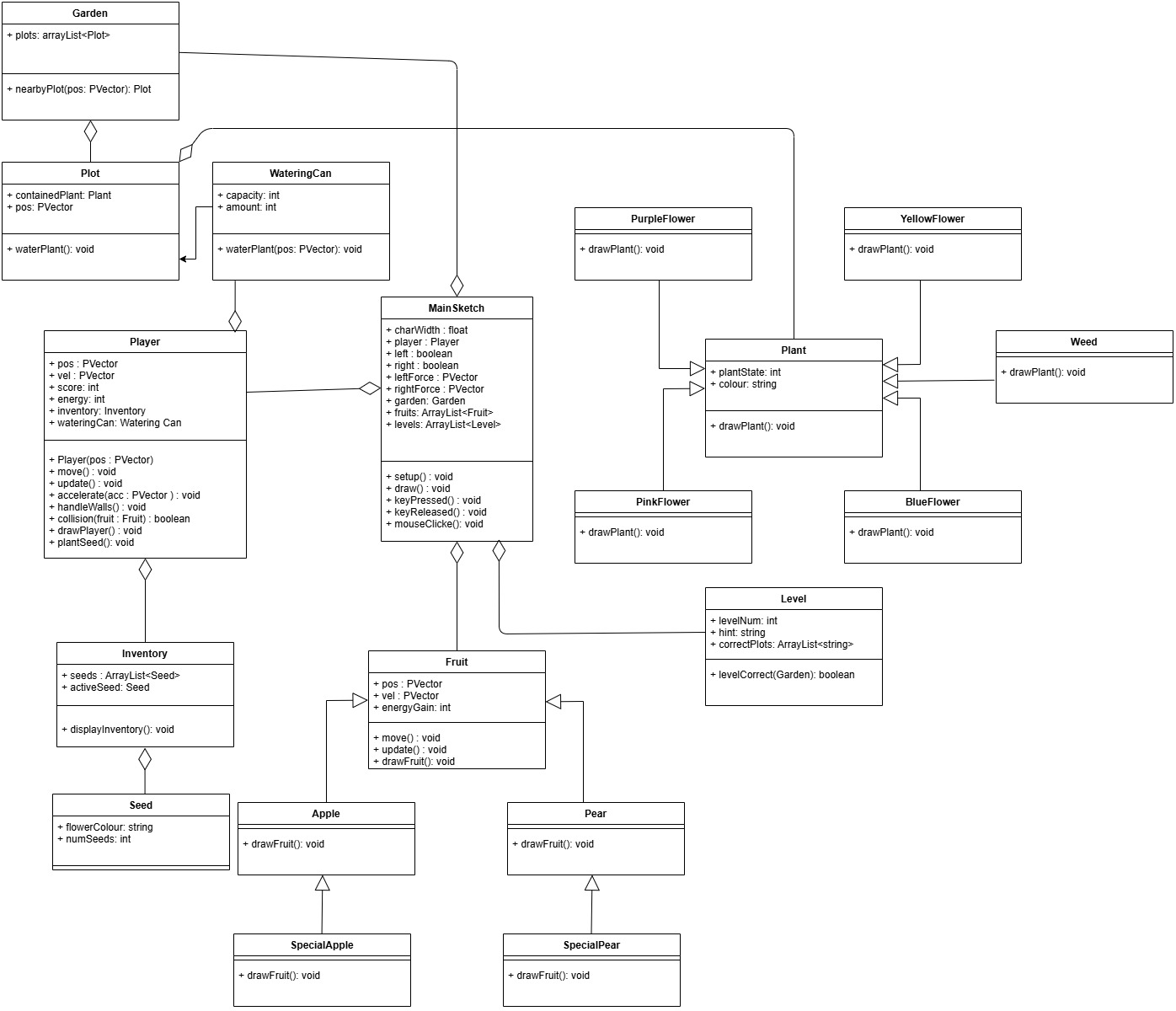
UML Diagram created in initial project planning
The design decisions
Visually, I wanted the game to feel soft and storybook-like, so I created original backgrounds, sprites, and interface elements using a pastel colour palette and hand-crafted assets in both Adobe Illustrator and Procreate.
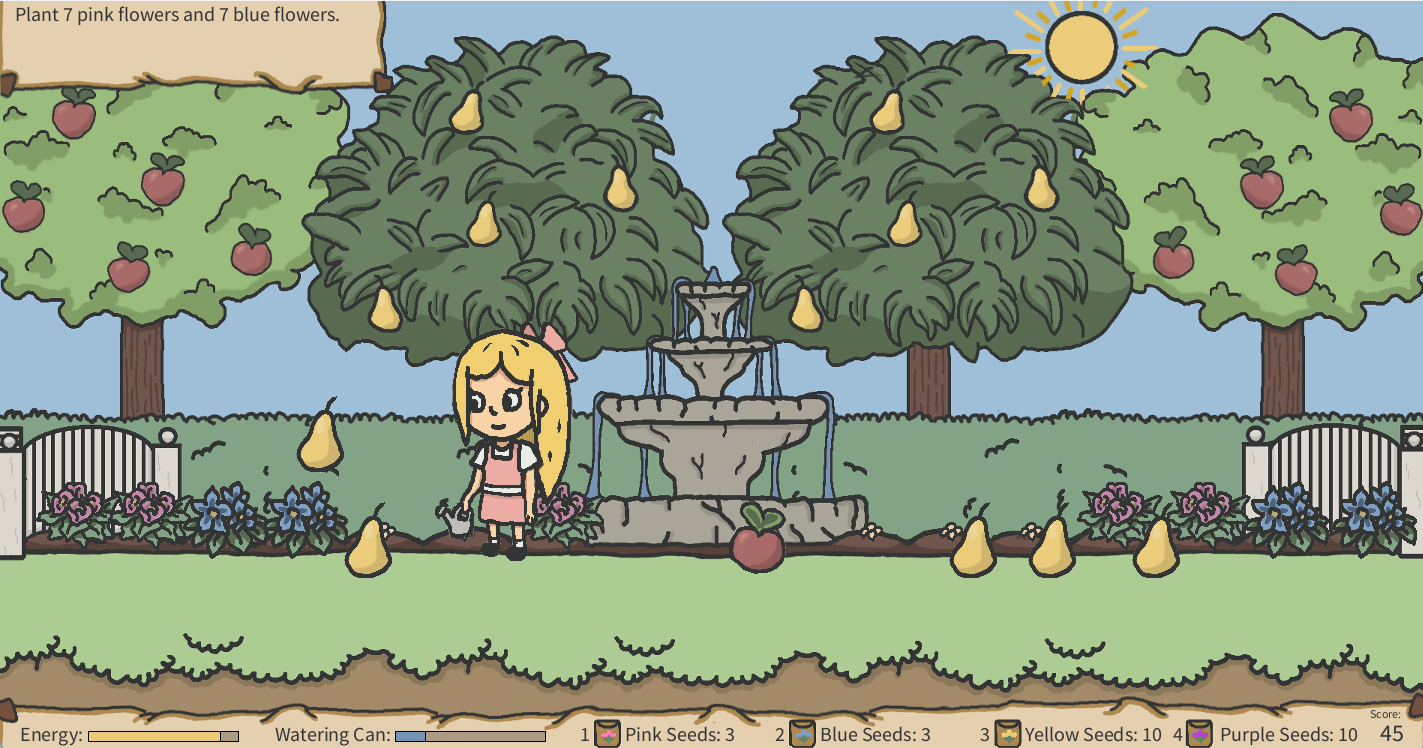
Player catching fruit to gain energy
"One of the biggest lessons from this project was learning how to balance challenge and calmness to create an experience that felt both engaging and reflective."
User testing played an important role in refining the experience. This led to adjustments in wait times to maintain player engagement, like reduced time for plant growth as well as increasing the frequency which fruit spawns so players can plant more without running out of energy. Overall, this improved the flow of gameplay and reduced chances of potential boredom while playing.
III
Takeaways
What worked
This project brought together storytelling, interaction design, visual design, and programming into one cohesive experience. What worked most successfully was the balance between gameplay and narrative, where mechanics became part of the storytelling itself rather than feeling separate from it. The project strengthened my ability to design systems that communicate mood, emotion, and progression through interaction.
What I would do differently
If I were to continue developing the game, I would expand player freedom within the gardening mechanics and conduct more extensive playtesting to refine pacing and difficulty. I would also explore ways to deepen the environmental storytelling, allowing players to uncover memories and narrative details in more dynamic and interactive ways.
Overall, this project taught me several essential skills in the importance of user testing and creating an engaging, narrative-driven experience that have become staples in my design practice.